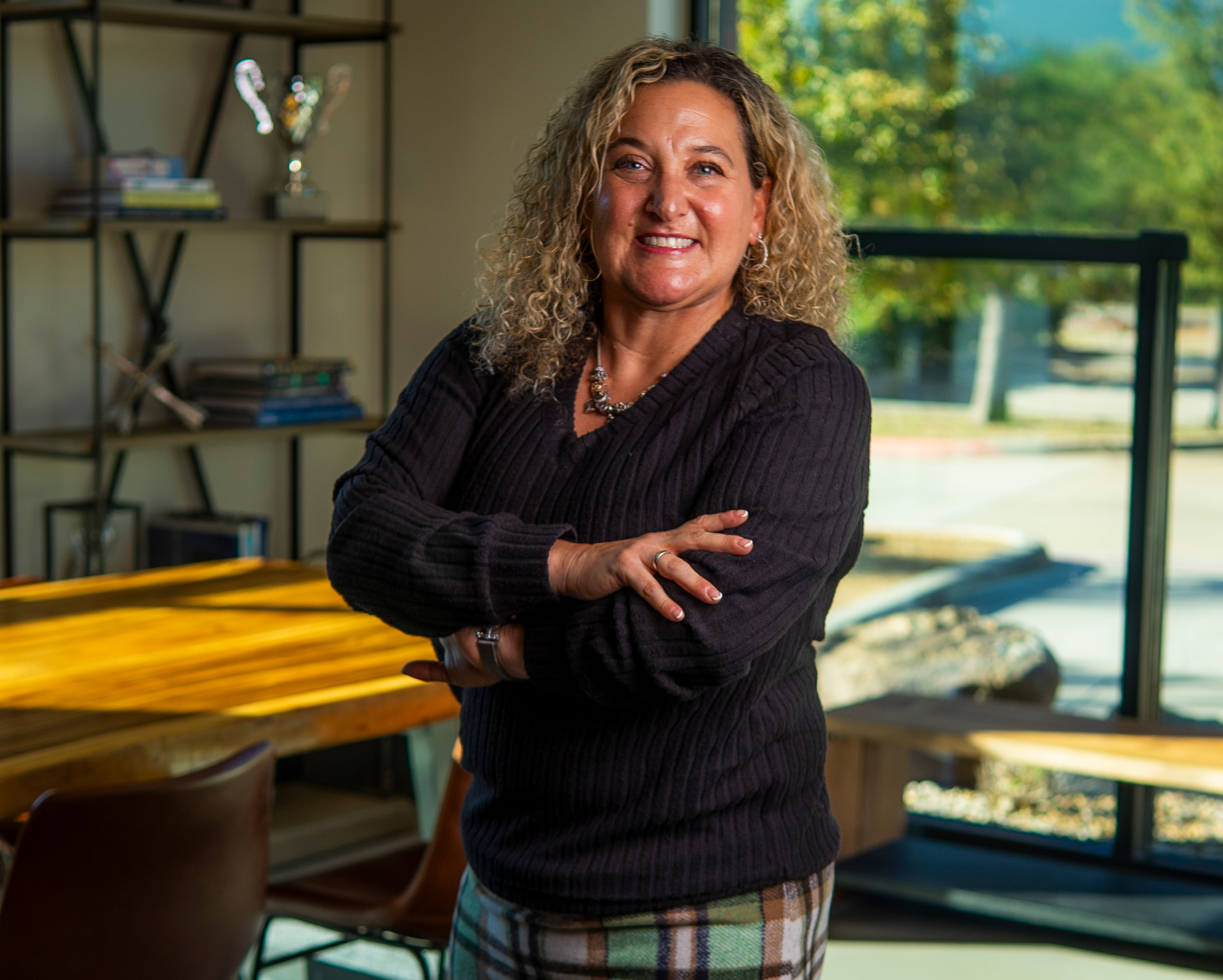
The Tooth That Taught Me to Speak Up
I’ve been a dental hygienist for more than 30 years. I’ve spent my career helping people take care of their mouths, their health, and sometimes their fears.
But before I became the Gum Goddess, I was a little girl in a dental chair who didn’t always know she was allowed to speak up.
My story actually begins with a wonderful dental hygienist, Glenna.
She made such an impression on me that she inspired me to become a hygienist. I originally thought I might become an orthodontist, but she showed me something about dentistry that stuck with me.
At 16, I started assisting in a dental office.
And if you’ve been in dentistry long enough, you know how much things have changed.
We didn’t wear gloves or masks the way we do today. We washed our hands and went to work.
I remember the first time I put on gloves. The dentist looked over at me putting mine on while he was putting his on, and we both laughed because it seemed so funny.
I even remember dentists washing gloves because they didn’t want to “waste” them.
Different time.
Different standards.
Different generation.
And maybe that’s part of the bigger story.
My first dental trauma happened when I was eight.
I was at a birthday swim party.
The birthday girl dove off the diving board and came up for air right underneath me.
She hit me in the chin.
I remember the pain.
I remember realizing there were pieces of tooth in my mouth.
And I remember deciding to keep playing.
I didn’t want to embarrass myself.
I didn’t want to ruin the party.
So the little girl in me swallowed the pain and carried on.
That front tooth would follow me for years.
And here’s the ironic part:
I’ve never had a cavity.
Not one.
But that tooth?
Root canal.
Internal bleaching.
Bonding.
And eventually, a veneer.
I trusted the professionals.
I was working as an endodontic assistant for a dentist when his daughter, a dental student, talked me into getting a veneer.
I trusted them.
She was in dental school.
Her father was a dentist.
I thought I was in good hands.
Over Christmas break, my tooth was ground down so severely that I was left without a tooth.
For three weeks, I barely talked.
I didn’t smile.
I didn’t want people looking at me.
I was embarrassed.
Eventually, the instructor placed a temporary and later the veneer.
The student failed the assignment.
She never became a dentist.
And her father never said anything.
He was also the kind of dentist who would throw instruments when you handed him the wrong one.
And I tolerated it.
I thought I had to.
I was grateful for the job.
I was young.
I was used to taking care of other people.
And somewhere along the way, I had learned that being a “good” person meant putting up with things.
Then came the implant.
Years later, I was talked into getting an implant by an oral surgeon.
I was a hygienist and had seen his continuing education cases. They looked beautiful.
Again, I trusted the professional.
He talked me into sedation.
I woke up with bruises on my body.
And instead of asking more questions or making a scene, I was grateful.
Grateful that I had a tooth.
Grateful that someone had helped me.
Grateful enough to convince myself that everything else didn’t matter.
But it did.
Today, I know the implant wasn’t placed correctly.
And I’ve decided to leave it alone.
Not because it doesn’t matter.
But because I’ve learned something much bigger than how to fix a tooth.
I’ve learned how to set boundaries.
That’s the part of my story I wish I had learned sooner.
I can respect someone’s education and still ask questions.
I can trust a professional and still get a second opinion.
I can be grateful and still say, “I’m not comfortable with this.”
I can be kind without being compliant.
And I can take care of other people without abandoning myself.
For years, I thought boundaries meant being difficult. I've been a doormat in relationships, not feeling heard in family, work ethics, etc. I'm trying to be intentional about breaking the generational curses.
Now I understand that boundaries are how we protect ourselves.
And this is where I think today’s generation has something to teach all of us.
They speak up.
They ask questions.
They record things.
They leave reviews.
They tell their stories.
It’s on camera.
And there’s accountability.
Childhood traumas follow into adulthood. No one is perfect.
When I was growing up, you trusted the professional.
If the dentist said it, you believed it.
If something went wrong, you often stayed quiet.
You didn’t want to make a scene.
You didn’t want to be labeled difficult.
You didn’t want to hurt someone’s feelings.
You just dealt with it.
But today’s generation is showing us something important:
Speaking up isn’t being difficult.
It’s being informed.
It’s knowing your worth. ( Still struggle with this one )
It’s understanding that professionals are human, too.
And it’s realizing that you have a voice — even when you’re sitting in a dental chair.
So as our kids head back to school…
Maybe one of the most important things we can teach them isn’t on their school supply list.
Teach them to speak up.
Teach them that their feelings matter.
Teach them that they can ask questions.
Teach them that “I don’t understand” is a perfectly good sentence.
Teach them that “I’m uncomfortable” is enough reason to pause.
Teach them that they don’t have to smile through pain just to make everyone else comfortable.
And teach them that being a good patient doesn’t mean being a silent patient.
Because I was that little girl.
I was the young woman who didn’t want to make a scene.
I was the dental professional who knew how to take care of everyone else but didn’t always know how to advocate for myself.
And maybe that’s why dental fear matters so much to me today.
Because sometimes dental fear isn’t about the drill.
It’s about the memory.
It’s about losing control.
It’s about not being heard.
It’s about being embarrassed.
It’s about trusting someone and feeling like you didn’t have a choice.
And sometimes that fear begins when we’re eight years old at a swimming party.
Today, I know better.
I know that my voice matters.
I know that your voice matters.
And I want every patient (especially every child and parent) to know the same thing...
You can respect your dentist and still ask questions.
You can trust your hygienist and still speak up.
You can get a second opinion.
You can ask for a pause.
You can say no.
You can leave.
You can advocate for yourself.
And you don’t have to apologize for protecting your health.
Because your health is not a place where you have to earn permission to have a voice.
I’ve spent decades helping people care for their teeth.
But perhaps one of the most important lessons my own teeth taught me was this:
Taking care of yourself is not selfish.
Having boundaries is not rude.
And speaking up is not being difficult.
It’s freedom.
And if you’ve ever sat in a dental chair thinking,
“I guess I just have to put up with this…”
I want you to hear me clearly:
No.
You don’t.
You get a voice, too.
— Hope Loyd, BSDH, RDH
Gum Goddess | Gums & Gossip™